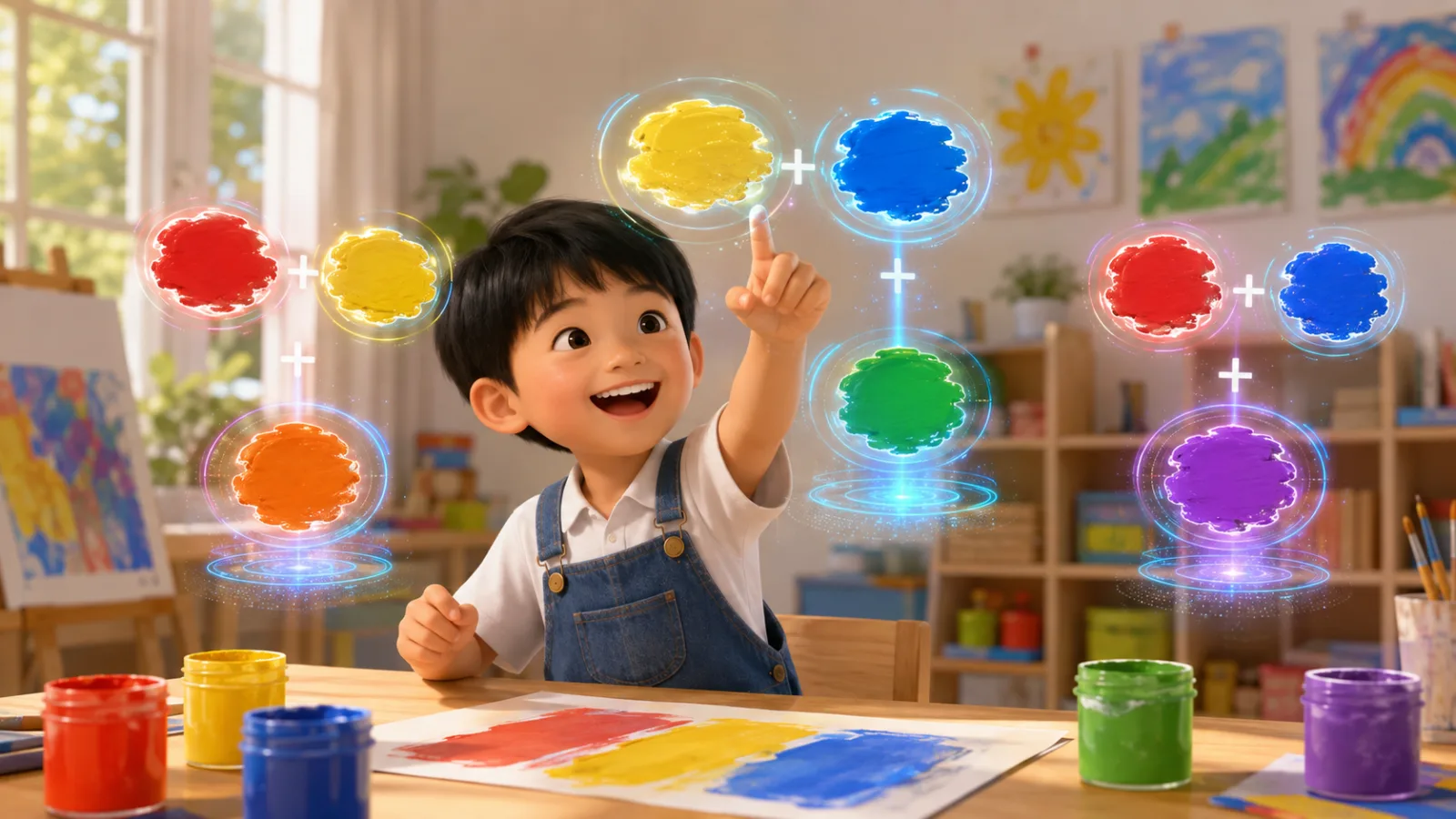
Colours and mixing
Multiple choiceArtGrade 16 questions

Art
An AR classroom game for Grade 4. Learners can aim with their hands at the camera or play by tapping the screen.
This set has 6 questions in an interactive multiple choice activity.
Curriculum indicatorศ 1.1 ป.4/3
A look before you play
A few real prompts from the game to help you choose an activity for your class.
Before you play
Practises understanding creativity as new and workable, how to brainstorm, the difference between copying and being inspired, crediting the original creator, and the value of trying new materials. Fits indicator ศ 1.1 ป.4/3.
6 questions, multiple choice with 3 options - How should you brainstorm? (generate lots first, choose later) - What is copying someone else's work? (copyright infringement and unfair) - How does inspiration differ from copying? (you develop the idea into your own work) - Why credit the original creator? (it shows respect and honesty about sources)
Use before a design project where children will search for images online, about 7 minutes, whole class. After the copying and inspiration questions, show two works inspired by the same picture that came out differently. If the brainstorming question goes badly, run a real two-minute brainstorm where criticism is banned. Play it linked to the class and the scores go into the gradebook.
- Copying: the distractor "it is fine if you change some colours" is a belief children really hold. Discuss how a recoloured copy is still someone else's work. - Inspiration: "the only difference is asking permission before copying" leads children to think permission makes a copy their own. - Creativity: some pick "the strangest idea even if unusable". Stress it must work too.
Multiple choiceArtGrade 16 questions
MatchingArtGrade 14 rounds
OrderingArtGrade 14 rounds
Multiple choiceArtGrade 16 questions