Grades 1–3 (P.1–P.3)
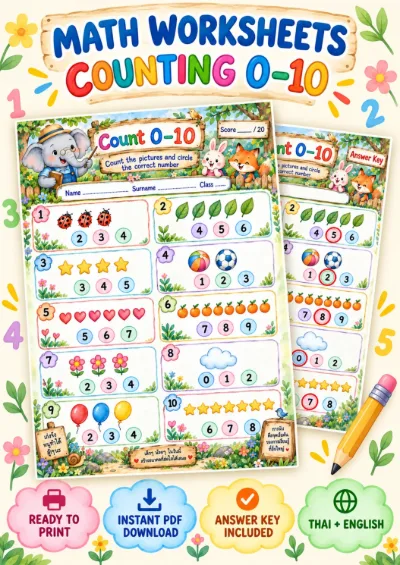
Count 0-10 - Count and Circle
Included with membershipJoin membership

Mathematics
An AR classroom game for Grade 3. Learners can aim with their hands at the camera or play by tapping the screen.
This set has 4 rounds in an interactive sorting activity.
Curriculum indicatorค 2.2 ป.4/1
A look before you play
A few real prompts from the game to help you choose an activity for your class.
Before you play
End-of-P3 review: sort acute and obtuse angles, groundwork for classifying angles in P4 (indicator ค 2.2 ป.4/1), numbers that divide exactly by 9, shapes with a right angle, and word problems that need multiplying or dividing (indicators ค 1.1 ป.3/6 and ป.3/7).
4 sorting questions with 2 boxes each - 30 and 60 degrees are acute; 100 and 150 degrees are obtuse - 27 and 45 divide exactly by 9; 28 and 50 do not - Square and rectangle have right angles; circle and equilateral triangle do not - "5 bags of 7" needs multiplying; "35 shared between 5 bags" needs dividing
Use as an end-of-year review game, 6-8 minutes, team mode. - The angles are given in degrees, which P3 has not learned. Before playing, say that a right angle is 90 degrees, so pupils just compare each number with 90 - For multiply versus divide, show that "5 bags of 7" and "35 shared between 5 bags" are the same situation seen from opposite sides - Play it linked to the class to record results in the mark book
- Putting 100 degrees under acute, with no feel for how wide 100 degrees is. Draw a right angle and open it a little more - Putting 28 under "divides by 9" because it is next to 27. Check against the 9 times table - Thinking an equilateral triangle has a right angle, confusing it with a right-angled triangle. Draw one and test it with a paper corner - Putting "48 shared between 6 rows" under multiplying because of the word "rows". Ask whether the total is already known
Grades 1–3 (P.1–P.3)
Grades 1–3 (P.1–P.3)
Grades 1–3 (P.1–P.3)
Grades 1–3 (P.1–P.3)
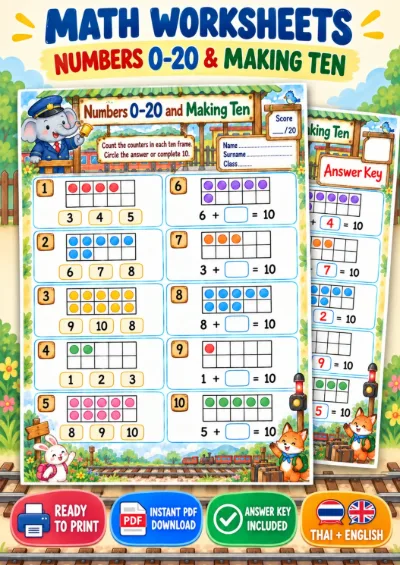
Multiple choiceMathematicsGrade 16 questions
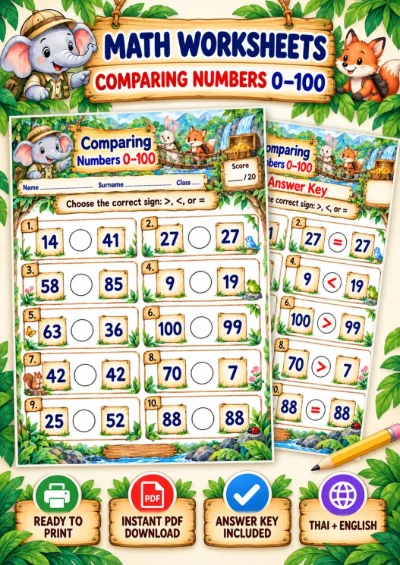
Multiple choiceMathematicsGrade 16 questions
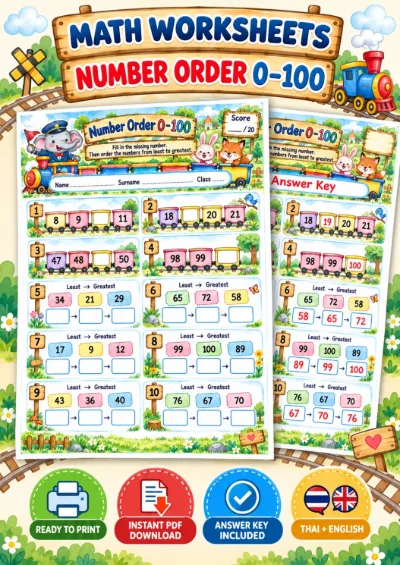
OrderingMathematicsGrade 14 rounds
SortingMathematicsGrade 14 rounds