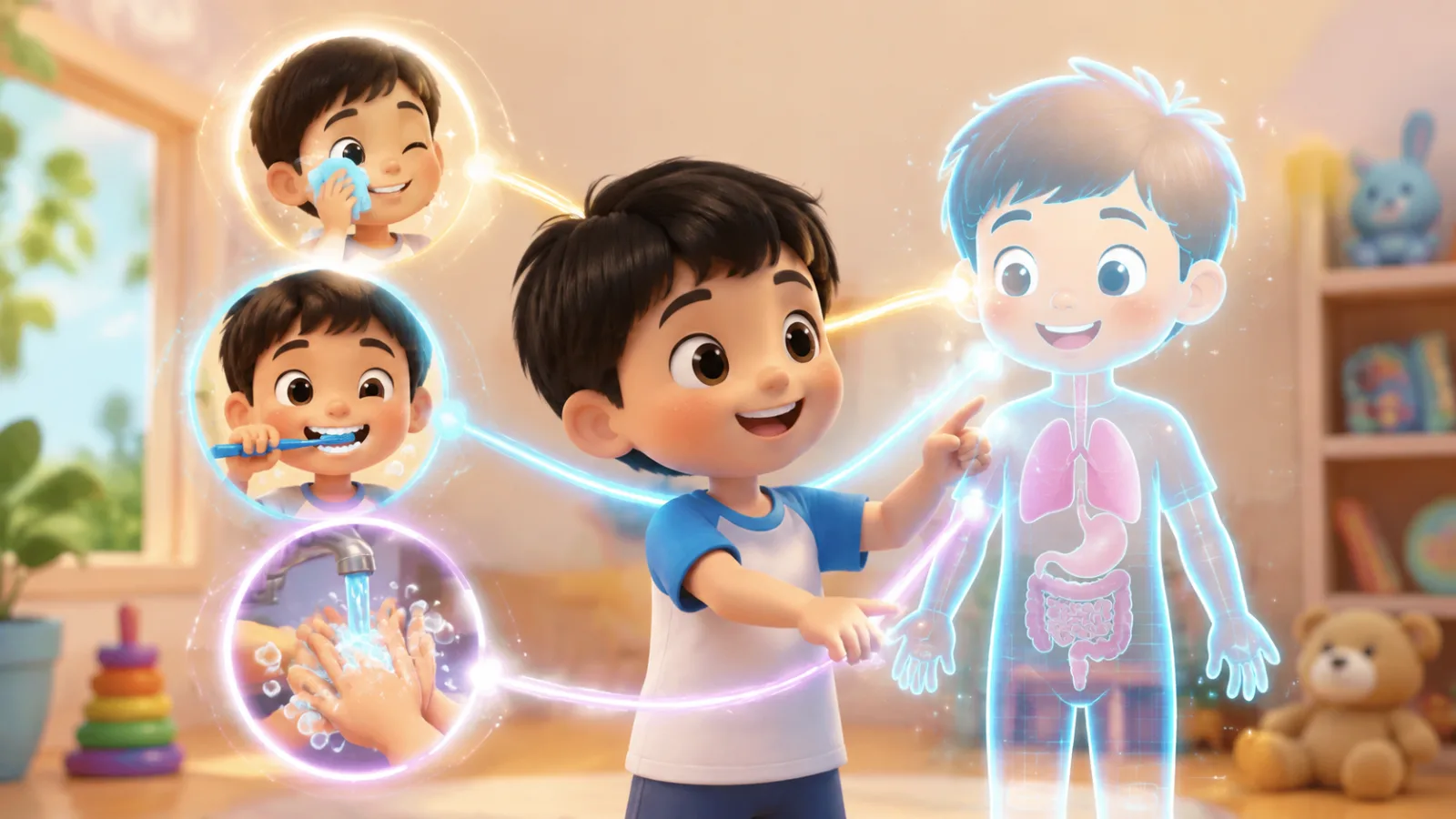
Body parts and care
MatchingHealth and Physical EducationGrade 14 rounds

Health and Physical Education
An AR classroom game for Grade 5. Learners can aim with their hands at the camera or play by tapping the screen.
This set has 6 questions in an interactive multiple choice activity.
Curriculum indicatorพ 2.1 ป.5/1
A look before you play
A few real prompts from the game to help you choose an activity for your class.
Before you play
Understand good mental health: that sadness is sometimes normal, how to build self-esteem, how to listen to a stressed friend without judging, what a healthy relationship looks like, and asking for help when feeling very low.
6 multiple-choice questions, 3 options each - Good mental health means managing feelings and getting on with others (distractor: being happy all the time) - Feeling sad sometimes is normal; watch out if it lasts - Build self-esteem with small goals and self-acceptance - When a friend shares stress, listen without judging and suggest finding an adult - Healthy relationships mean respect, trust and honest talk; when feeling very low, tell a trusted adult
Use in a health lesson on mental health; about 6-7 minutes, played solo. - Show anonymous class totals and discuss the questions where answers split - For question 4, practise non-judgemental listening in pairs: one shares a small worry, the other summarises what they heard - End by naming where to get help, such as the school counsellor and the 1323 mental health hotline - Play it linked to the class to record results in the mark book.
- Question 1: many children believe good mental health means always being happy; question 2 corrects this, so go over the two together - Question 4: 'quickly tell them how to fix it' is what children want to do to help; explain friends sometimes need a listener first - Question 5: 'giving in to the other person to avoid arguments' looks like good friendship to a child - Question 6: 'stay alone quietly until you feel better' is what children really do; address it gently
MatchingHealth and Physical EducationGrade 14 rounds
Multiple choiceHealth and Physical EducationGrade 16 questions
Multiple choiceHealth and Physical EducationGrade 16 questions
SortingHealth and Physical EducationGrade 14 rounds